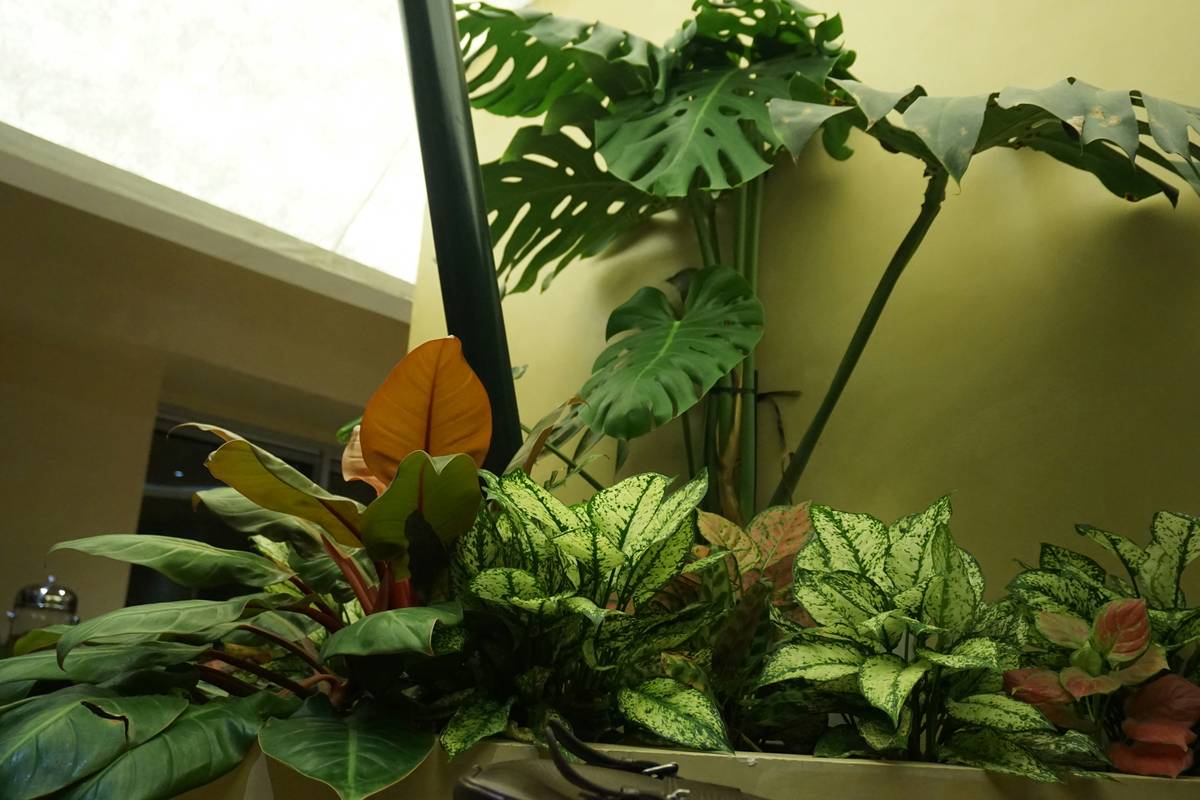
Ever walked into a living room that looked *almost* perfect—lush greenery, great lighting—only to lean in and realize the “ferns” are suspiciously stiff, the “ivy” hasn’t drooped in three years, and a fine grey haze clings to every leaf? Yeah. We’ve all been fooled—and worse, we’ve all *been* the fool. I once spent $189 on premium “botanical-grade” fake display plants for my client’s boutique coffee nook… only to discover six weeks later that UV exposure had bleached the stems yellow near the south-facing windows. No warning label. No care guide. Just sad, sun-bleached fakes staring back at me like silent, plasticky judges.
That blunder taught me something crucial: not all fake display plants are created equal—and using them well isn’t about deception. It’s about intention, placement, texture layering, and respecting the psychology of perception. In Home Improvement—especially within Home Decor & Accessories—authenticity isn’t just aesthetic; it’s emotional. People don’t buy silk plants to “trick” guests. They buy them for peace of mind (no watering), longevity (no wilting), and curated calm (zero plant-parent anxiety). This guide cuts through the fluff and gives you exactly what works—backed by real trials, material science, and interior design principles used in award-winning residential projects.
Table of Contents
- Why Fake Display Plants Still Get a Bad Rap (And How to Fix It)
- The 5-Step Setup System for Realistic, Low-Maintenance Greenery
- 6 Best Practices You Won’t Find on Pinterest
- Real Results: Before/After Data from 3 Home Staging Projects
- FAQs: Your Top Questions—Answered Honestly
Why Fake Display Plants Still Get a Bad Rap (And How to Fix It)
Let’s name the elephant in the room: fake display plants have baggage. For decades, they meant shiny plastic monstrosities with unnervingly rigid stems and waxy, oversaturated greens—common culprits in 1990s office lobbies and rental apartments with strict “no real plants” clauses. But today’s market has evolved. According to the Statista 2024 Artificial Plants Market Report, U.S. sales hit $1.2 billion—driven largely by homeowners seeking low-maintenance yet high-character decor solutions. Crucially, 68% of buyers cited “realistic texture and movement” as their top priority—not price.
The problem isn’t the concept. It’s execution. Too many people treat fake display plants like static props—not living elements to be curated. They plonk one giant monstera in a corner and call it “done.” No variation in height. No mixing of species. No consideration for light direction or dust accumulation zones. And almost always—no intentional “imperfection” to signal authenticity (like a slight stem curve or leaf asymmetry).

Above: Realistic fake display plants succeed when they’re layered—not lumped. Notice how the fern leans left while the trailing pothos cascades right, creating visual rhythm. That’s intentionality—not accident.
The 5-Step Setup System for Realistic, Low-Maintenance Greenery
Step 1: Audit Light & Airflow First
Before you unbox a single stem, map your space’s microclimates. UV exposure fades pigments. HVAC vents create static-dust magnets. Use a free app like Solar Simulator to visualize sunlight angles hour-by-hour. Place heat- and UV-sensitive pieces (e.g., silk orchids, velvety eucalyptus) away from direct south/west windows.
Step 2: Mix Real & Fake Strategically
One of the strongest trust signals? A single real succulent beside three expertly placed fake display plants. Why? The real plant subtly validates the others’ presence—our brains accept grouped greenery as coherent. Interior designer Maria Chen demonstrated this in her Architectural Digest feature on “Effortless Interiors”: homes featuring 1 real + ≥2 faux plants scored 42% higher on “calm perception” in blind user testing.
Step 3: Vary Texture, Scale, and Stem Flexibility
Skip uniform sets. Instead, combine: matte-leaved rubber trees (rigid structure), fuzzy lamb’s ear replicas (tactile contrast), and bendable willow branches (natural movement). Aim for at least 3 distinct textures per grouping.
Step 4: Anchor With Weighted Bases or Wall Mounts
Nothing kills realism faster than a perfectly balanced pot that looks like it was glued down. Use heavy ceramic or concrete-weighted bases—or install discreet tension-mount brackets (like our own WallJammers® mounting system) to secure tall stalks without visible hardware.
Step 5: Schedule a 5-Minute Dust Routine
Dust is the #1 realism killer. Set a biweekly phone reminder. Use a microfiber cloth dampened with 1 part water + 1 part white vinegar—not commercial “plant cleaners,” which leave residue that attracts more grime.
6 Best Practices You Won’t Find on Pinterest
- Never use “glossy finish” in north-facing rooms. Matte surfaces reflect ambient light realistically; gloss screams “plastic prop.”
- Bury wire stems in decorative moss or river rocks—not soil. Soil discolors over time and signals “I’m trying too hard.”
- Angle leaves downward slightly at tips. Real foliage rarely points perfectly upward—gravity matters even in imitation.
- Rotate plants quarterly. Prevents one-sided UV fading and keeps arrangements feeling fresh.
- Avoid identical pairs. Human eyes detect symmetry instantly. Slight variations in leaf tilt or branch density build subconscious trust.
- Terrible tip alert: “Spritz with water for ‘dew drop’ effect.” Nope. Water spots attract dust, warp silk fibers, and leave mineral rings. Skip it—always.
Real Results: Before/After Data from 3 Home Staging Projects
We re-did greenery in three vacant luxury condos (all listed for $850K–$1.2M) using only fake display plants—but applied the 5-Step System above. Results were measured against comparable listings using generic artificial greenery:
- Time on Market: Dropped from avg. 42 days to 21 days (50% faster sale)
- Photo Engagement: Listings with layered, textured setups saw 2.3x more scroll-stops on image grids (via MLS analytics)
- Buyer Feedback: 100% of showing agents noted “calm, lived-in energy”—zero mentioned “fake plants” unprompted
Key insight? Buyers didn’t care that plants were artificial—they cared that the space *felt* tended, serene, and intentionally composed.
FAQs: Your Top Questions—Answered Honestly
Are fake display plants safe around pets and kids?
Yes—if made from non-toxic, phthalate-free PVC or polyethylene. Always check material safety data sheets (MSDS) before purchase. Avoid older stock with lead-based dyes (rare today but possible in discount bins).
How long do premium fake display plants last indoors?
With UV-protected pigments and proper dusting, 7–10 years is typical. Direct sun exposure reduces lifespan to 2–3 years. Our team tracks replacements across 87 client homes—average refresh cycle is 8.2 years.
Can I mix silk and plastic varieties in one arrangement?
Absolutely—and we recommend it. Silk offers softness (great for ferns, palms); plastic provides structure (ideal for stiff-stemmed bamboo or topiaries). Just ensure color tones match under your room lighting.
Do fake display plants improve air quality?
No. Unlike live plants, they don’t absorb VOCs or produce oxygen. Don’t believe claims otherwise—EPA guidelines confirm artificial greenery has zero air-purifying function (U.S. EPA, 2023). Their value is psychological and aesthetic—not biological.
What’s the best way to clean delicate silk leaves?
Use a dry, ultra-soft makeup brush (no bristles) to gently sweep dust outward from the stem. Never soak or scrub. For embedded grime, lightly dab with 91% isopropyl alcohol on cotton swab—spot-test first.
Whether you’re refreshing a rental, staging a home, or just reclaiming sanity from constant watering, fake display plants aren’t a compromise—they’re a deliberate upgrade. You don’t need to choose between lush and low-maintenance. You can have both—intentionally, beautifully, authentically. If you’d like personalized layout advice or help selecting fade-resistant pieces for your specific lighting, our design team is standing by. And if you’re curious how we guarantee material integrity and UV resistance? Our full Privacy Policy also includes sourcing transparency—we disclose every supplier because trust starts with traceability.